How Groomers Read Dog Body Language
The stress signals groomers watch for, from lip-licking to whale eye, how they respond at each stage, and what to tell your groomer at drop-off.
 Updated September 18, 2026 4 min read
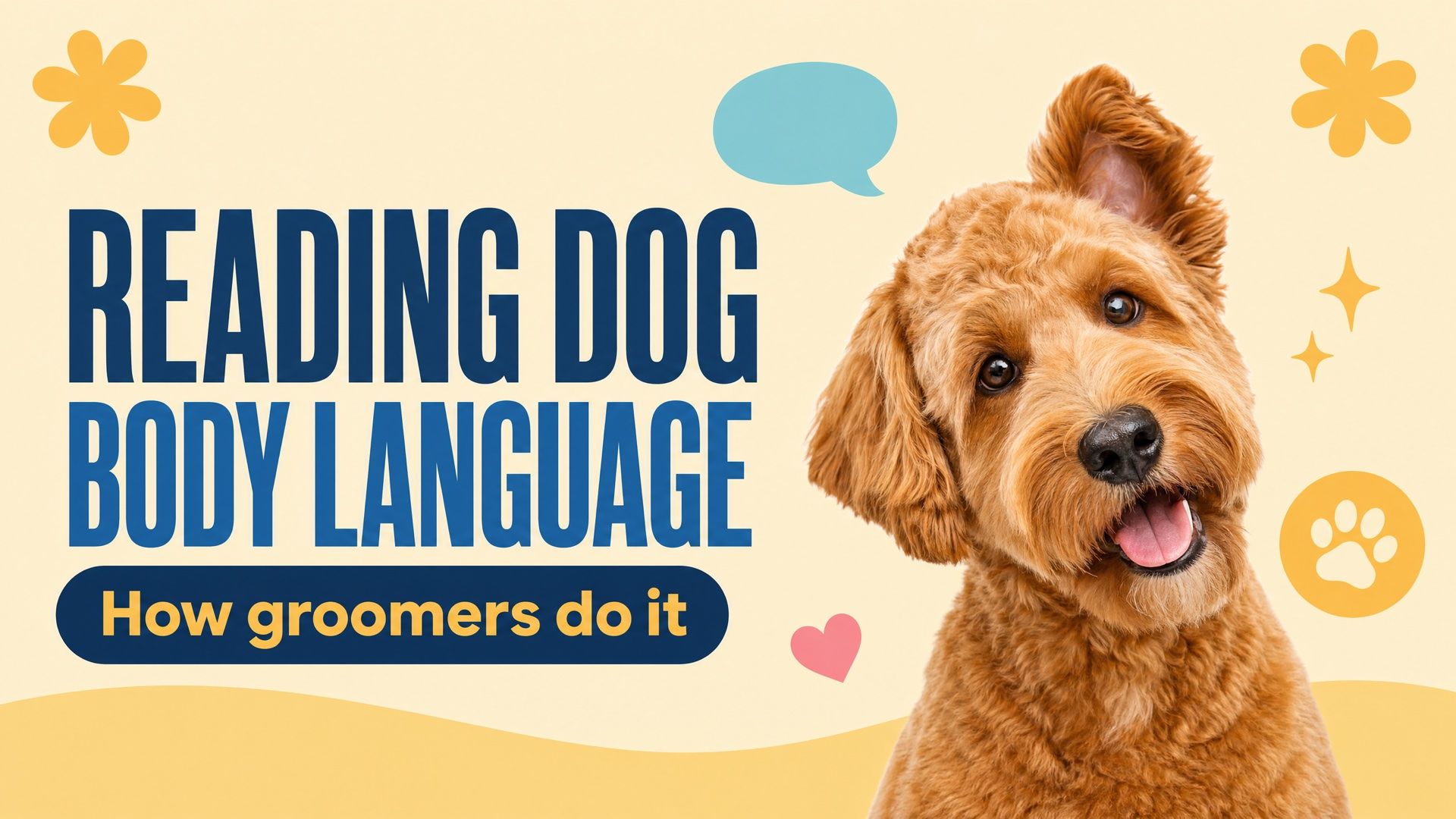
A dog can’t say “I need a minute,” but they’re telling you all the time. Groomers watch for those signals through the whole appointment, because a dog’s body almost always shows stress well before a growl or a snap. Here’s what a groomer is looking for, how it changes from the table to the tub to the dryer, and how a careful groomer responds.
If you’re curious about the other side of this, how a well-kept coat makes your dog’s own signals easier to see, read the connection between grooming and canine body language. This post is about what the groomer is reading.
Relaxed vs. Uneasy: Setting the Baseline
Before anything else, a groomer wants to know what “okay” looks like for your dog.
- Relaxed: Soft eyes, a loose or slightly open mouth, ears in their natural position, weight spread evenly, a loose body, and a tail at its usual height. A relaxed dog sniffs around, takes a treat, and shifts position easily.
- Uneasy: The body goes still and tight, the mouth closes, ears pull back, weight shifts away from the groomer, and the tail drops or tucks. Many uneasy dogs stop taking treats.
Every dog has its own normal. A curled tail that’s always up, ears that are hard to see under a doodle’s fluff, or a dog who is naturally quiet can all make reading them trickier. That’s one reason your notes at drop-off help so much.
Early Stress Signals Groomers Watch For
These are the quiet signals that come before anything dramatic:
- Lip-licking or tongue flicks when there’s no food around
- Yawning out of context, when the dog isn’t tired
- Whale eye: the dog turns its head slightly away but keeps watching, so the whites of the eyes show
- Stiffening or freezing mid-movement
- Tail changes: dropped or tucked, or held high and rigid. A wagging tail isn’t always a happy one
- Ears pinned back or flattened against the head
- Turning away: looking off, turning the head, or leaning away from the groomer’s hands
- Trembling (though after a bath, a groomer also has to consider whether the dog is simply chilly)
- Panting when the dog isn’t hot, or a shake-off after being handled, like a reset
Signals tend to come in clusters. One yawn on its own means little. A yawn, a lip lick, and a head turn in quick succession means it’s time to slow down. When early signals are ignored, dogs often escalate to growling or snapping, so catching them early keeps everyone safe.
Signals by Stage
On the table
Watch for freezing, leaning away, scanning the room, or repeatedly trying to sit or lie down. For some dogs, especially older ones, sitting down is less about fear and more about tired or uncomfortable legs.
In the bath
Trying to climb out, a tucked tail, trembling, and a low, crouched posture are common. Water temperature and keeping water out of the face and ears make a big difference here.
At the dryer
This is where many dogs need the most reassurance. Flinching when the dryer starts, turning the head away from the airflow, whale eye, and backing up are all signs the dog is struggling with the noise or the sensation.
During nails
Pulling the paw back, a stiff leg, lip-licking, whining, or freezing completely are typical. Feet are one of the most guarded areas on many dogs.
How a Groomer Responds
Reading signals only matters if the groomer does something with them. A thoughtful response usually looks like this:
- Slow down: Smaller movements, a calmer pace, and a little more time between steps.
- Take a break: A short pause lets the dog reset. At Dapper Doodle Grooming we use a patient, low-stress approach with breaks as needed.
- Change the approach: Start drying at the back end instead of near the face, hold a paw closer to the body, or switch to a different area and come back later.
- Turn the intensity down: Lower airflow, more towel-drying first, or hand work around the face.
- Reward calm: Noticing and rewarding the relaxed moments helps the dog find more of them.
- Don’t force it: Pushing through real distress makes the next visit harder. If something isn’t going to happen safely today, a good groomer tells you honestly how it went and what might help next time.
For more on how visits are adjusted for dogs who find grooming hard, see how groomers customize appointments for anxious or reactive dogs.
Puppies and Seniors
Puppies wiggle, mouth, and lose focus fast, and not all of that is stress. It’s being a puppy. What a groomer watches for is the shift from playful squirming to freezing, tucking, or trying to escape. Early visits are about ending on a good note, not a perfect haircut. See puppy’s first groom for how to set that up.
Seniors often show discomfort more than fear. Shaky back legs, reluctance to stand, or sitting down again and again can mean a dog is tired or sore. Dogs with reduced hearing or vision also startle more easily, so it helps to approach where they can see you and keep a hand on them. Read more in how grooming supports aging and senior dogs.
What to Tell Your Groomer at Drop-Off
You know your dog’s signals better than anyone. A few minutes of sharing at check-in gives your groomer a head start:
- Areas your dog guards, like feet, ears, tail, or face
- Known triggers, such as dryers, nail trims, or being lifted
- Any bad grooming or vet experience in the past
- Recent injuries, soreness, or anything your vet has told you to watch
- How your dog shows stress, and what helps them settle
- Any history of growling or snapping. Being upfront keeps your dog and the groomer safe
A steady routine helps too. Most dogs do well with a groom every 4–8 weeks, and double-coated dogs on a de-shedding schedule every 4–8 weeks, and familiar visits tend to feel less stressful over time.
Have questions about your dog? Call Dapper Doodle Grooming at (417) 496-1588 or visit us at 1929 E Independence St, Springfield, MO 65804. We’re open every day from 9AM to 6PM.
Filed under Behind the Groom: Expert Tips & Pro Advice